Showing posts with label crime. Show all posts

Wednesday, February 6, 2013

Inequality, Crime and Jellybeans

Inequality does not increase crime - heck, increased inequality might even decrease crime. Michal Brzezinski reports in Applied Economics Letters results from some US state-level panel regressions. Hat tip to the excellent Andres Marroquin.

He uses two measures of inequality as independent variables in separate specifications: the share of income going to the top 10% and the share going to the top 1%. He uses two estimation techniques in all cases: fixed effects (FE) which identifies effects based on changes within states, and the GMM dynamic panel estimator which allows for endogeneity. He consequently runs 4 regressions on each of nine crime categories. I'll here summarize results from his 36 regressions.

Using fixed effect estimation, an increase in the share of income going to the top 10% reduces violent crime, murder, property crime, burglary, and larceny; all results here significant at the 5% level. In none of these 9 specifications does an increase in inequality increase crime; all the rest are statistically insignificant. If we look instead to the share of income going to the top 1%, increases in inequality reduces violent crime, robbery, property crime, burglary, and larceny; again, all significant at the 5% level, with no FE estimation reporting crime increases.

Using the authors' preferred GMM estimator, and now aggregating across both inequality measures, results are pretty weak. Increased inequality correlates with increased motor vehicle theft, but otherwise has mixed and statistically insignificant results; the increase in motor vehicle theft is only significant at the 10% level in the GMM specification using the fraction of income going to the top 1%.

The paper also includes a control for beer and spirit consumption. In some fixed effect estimations, alcohol consumption increases crime rates; in none of the GMM specifications does it have any effect: we get a mix of insignificant increases and decreases in the various crime rates with increased alcohol consumption.

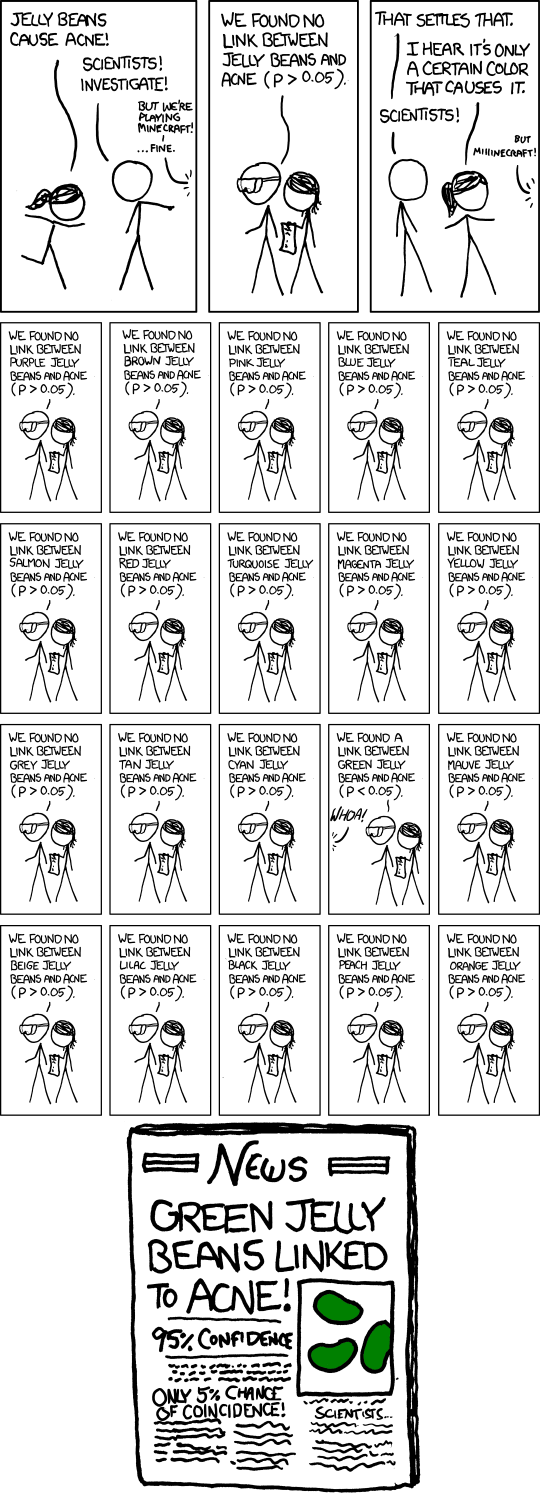
So it seems not unreasonable to conclude that inequality does not correlate with increased crime rates in the United States, and that it may reduce crime. While the paper's abstract notes that there's perhaps a link between the top 10% income share and motor vehicle theft, that's one significant crime increase out of 36 specifications at the 5% threshold; I wouldn't have put that result in the abstract. Because of, well, this:


Sunday, January 27, 2013

Afternoon roundup

Today's afternoon news roundup.

Item the first: NZ's organ donor rate remains low; the kidney waiting list in particular remains long. Andy Tookey again suggests compensating cadaveric organ donors with subsidised funerals to encourage donation. I agree.

Item the second: if you're a small country, and the US ignores a WTO ruling in your favour, your options are pretty limited. Antigua gets points for creativity. HT: Susan.

Item the third: the National Business Review reprinted a couple of my posts this past weekend; here's cost-benefit analysis and banning cats. Their comment pool is a bit different from the one we have here. I'll be talking with Jim Mora and Radio New Zealand's The Panel on the topic around 4:15 this afternoon. [Update:  embedded below]


Item the fourth: American crime rates seem more sensitive to number of police on the streets rather than number of people in jail; the policy recommendation is to spend less on imprisoning people and spend more instead on community policing. A small portion of this effect is may be due to that crimes committed by police may be less likely to show up in the crime rates. The Bridgeport, Ct. police officers filmed stomping on the head of an immobilized and tazered individual are on desk duty rather than under arrest, at least so far. At least the guy who filmed them is unlikely to be arrested; had it happened in another state results could have been different. But I do agree with the overall policy recommendation - so much the more so if it could be done by diverting police resources away from victimless crimes.

Item the fifth: SciBlogs is running a survey on scientific literacy. I got a perfect score on it, but only because I lied a little bit about one of my answers. One question asks what makes a scientific result most credible: peer review, reputation of the research team, or a couple of other options. I knew the right answer was peer review. But I often put a lot more weight on researcher reputation. Things are so infrequently replicated, and results so often fragile when replicated, that I far more typically weigh a bundle of researcher reputation, publication, and topic. A new working paper from somebody who's credible is just worth more to me than a published piece from somebody who has a bit of a reputation for results that are fragile to specification search.

Item the sixth: +Jeet Sheth rightly wonders whether this is inconsistent with our usual assumptions around transitional gains traps. I'd think of it more in terms of a Peltzman regulatory model. In New Zealand, older used cars must undergo a basic safety inspection every six months while newer ones only need it every year - the Warrant of Fitness. They don't seem to be a profit centre for most garages except inasmuch as they give garages the opportunity to sell other (hopefully needed) services to those getting inspected; some garages specialise in only doing WoF checks on a quick while-you-wait basis. The national government proposed moving to annual inspections for vehicles first registered in 2000 or later. Recall that in the Peltzman model, regulation always balances the public interest with that of the regulated party; that balance changes as technology changes. The mechanics' trade association lobbied against the change, painting it as a road safety issue; the Automobile Association lobbied in favour of it despite also providing WoF checks. While dedicated WoF stations could have been earning some rents from the regulations, free entry into providing WoFs would have meant those rents would not have been huge. It's better viewed in a Peltzman model where deregulation (or a loosening of regulations) can emerge when a technological shock makes the regulation less beneficial to the regulated and to customers. Here, mechanics who weren't WoF specialists would have been seeing less benefit from the regulation as car manufacturing standards improved over time (and so potential gains from on-selling other services were smaller); the regulation's incidence was also pretty obvious to car owners.

Item the seventh: having this particular lotto number selection strategy isn't clever, it's just a way of increasing your winnings if your main numbers happen to come up. It's a bit nuts to purport that any number selection strategy is more clever than any other. It's a random draw guys. Random.

Item the eighth: Andrea Marchesetti points to a nice little story perhaps illustrating Caplan's rational irrationality model. Recall that in Caplan's model, when beliefs are of low cost, you'd indulge your bliss belief; when beliefs contrary to truth become expensive, you scale back demand for them. The Wall Street Journal reports that "haunted" homes in Hong Kong no longer trade at much of a discount; the property boom has pushed prices up. Entrepreneur Ng Goon Lau buys up at discount houses where an unnatural death has occurred, rents them out to expats who don't believe in ghosts, then later sells them - presumably with reports from the renters showing there to be no ghosts. It's unclear from the story whether the Hong Kong boom has brought in sufficient expats that haunted houses were bid up to standard prices without locals changing their beliefs, or whether the absolute increase in housing costs induced locals to put up with spooky ghost problems.

So concludeth the closing of the browser tabs.
Thursday, October 11, 2012

The paper and the rhetoric

From today's New Zealand Medical Journal:

The University of Otago's John Langley and and Pauline Gulliver find that alcohol was "involved" in 23.6% of non-fatal assaults by males; 13.1% of non-fatal assaults by females. Table 1 shows assaults to be relatively concentrated among Maori (31.7% of male assaults, 47.8% of female assaults; Maori represent about 15% of the population by the 2001 Census) and among the poorest cohorts - the authors note decile 9 males have assault rates 26 times the average in decile 1. There is no econometric analysis allowing for the disentanglement of ethnicity and income effects; Maori are more heavily represented among the poorest cohorts. Note further that "involvement" here also refers to the victim, not necessarily the perpetrator, unless the victim and the perpetrator co-identify (two people in a fight, for example).

We also have no clue about base rate alcohol consumption. If assault is concentrated among the poorest, and among Maori, if we were to take a random snapshot of that cohort during the day and ask "Have you had alcohol recently?", we don't know what the answer would be. What is the rate of alcohol involvement in other non-violent activities among the at-risk cohort: alcohol-involved rugby-watching, alcohol-involved friendly gatherings, and so on. I'd expect it would be higher than the population average, but that's just a hunch. If a high proportion of activities undertaken in this population group could have the "alcohol involvement" tag added, it's hard to draw causal inferences about the effects of alcohol on assaults from simply observing that between a fifth and a quarter of incidents involve alcohol.

In noting the study's limitations, the authors write:
We have no way of knowing whether alcohol involvement played a casual role in the assaultive injuries described in this paper. It could well be, for example, that many of the males just happened to be drinking at the time. On the other hand there is evidence from elsewhere that being intoxicated increases one’s risk of becoming a victim of assault.9 Alcohol misuse is also a distal risk factor for assault, where a pattern of heavy episodic drinking has been associated with a threefold increase in victimisation involving drinking.10
And today's headline: "Booze is fuelling rise in serious assaults" . From the newspaper:
A rise in serious assaults among young Maori and Pasifika males to ''disturbingly high levels'' has researchers calling for the Government to take action over alcohol.


Emeritus Professor John Langley, of the University of Otago's Injury Prevention Research Unit, says assaults are rising steadily and blames the Government for their failure to curb alcohol consumption.
A study published today in the New Zealand Medical Journal, co-authored by Langley and Dr Pauline Gulliver, examined the 8006 serious non-fatal assaults between 2000-2009 and is the first comprehensive statistical analysis of this category of violence in over two decades.
 ...

Excessive alcohol consumption was a common factor in the assault incidents, which frequently featured young to middle-age males beating up similarly aged males, Langley said.
''One of the key messages from the paper is 80 per cent of the problem is males. Most of those males are being assaulted by other males, and guess what the fuel is: it's alcohol.''
He said the Government needed to make alcohol harder to buy, and said their lack of action to date had been ''inexcusable''.
The article continues in that vein, quoting the study's authors drawing an awfully long policy bow from their paper's findings.

Things that definitely are NOT in the NZMJ paper:
  • Any assertion of causality regarding alcohol in this data;
  • Any discussion of time trends in alcohol's involvement in assaults. They give time trends on the rate of assaults, but nothing on time trends for alcohol's involvement;
  • Any reason to believe that alcohol consumption has increased among the at-risk cohort over the period.

Table H6.2 Age-standardised potentially hazardous drinking prevalence rate (%), for adult drinkers, by ethnic group and sex, 1996/1997, 2002/2003, 2006/2007
European/OtherMāoriPacific peoplesAsianTotal 15+
1996/1997
Male31.046.148.211.630.9
Female12.030.620.85.113.3
Total21.638.338.19.422.3
2002/2003
Male29.942.444.111.530.6
Female13.324.124.34.814.2
Total21.732.936.18.622.5
2006/2007
Male32.146.846.612.931.2
Female14.528.525.83.814.7
Total23.137.537.78.922.9
Source: Ministry of Health
Notes: (1) Rates are age-standardised using the WHO world population. (2) People who reported more than one ethnic group are counted once in each group reported.
The prevalence of potentially hazardous drinking dropped from 1996 to 2002 among Maori before rising again to roughly its 1996 level by 2006. The NZMJ paper has serious assaults by bodily force (ie a fight without weapons) sharply increasing from 2003 onwards, so that's at least not inconsistent with the alcohol hypothesis. But look at the rates: prevalence of hazardous drinking went from 32.9% to 37.5% among Maori over the period (with much much smaller increases for other groups). A fourteen percent increase. Serious assaults using bodily force more than doubled (other categories were flat).

Further, where the rate of potentially hazardous drinking is pretty high for some cohorts, it would be more surprising to find an absence of alcohol use. What's the rate of alcohol involvement in watching rugby within that cohort? How can we say anything about causality or draw strong policy conclusions?

I guess the NZMJ piece is a convenient hook, but it sure doesn't look like it provides much scientific basis for the policy conclusions they're hanging on it. And I fully expect it'll be cited often as evidence favouring cracking down on alcohol.

Monday, August 20, 2012

NBER roundup [updated]

The late-night NZ-time twitter feed occasionally brings American morning delights. Tonight, it's the new NBER working papers. In the queue for when I'm back on campus and can read the NBER subscription papers:*
  • Callison and Kaestner find tobacco consumption less price sensitive than previously thought; they reckon it would take a 100% tax increase to get a 5% drop in consumption. This would be estimated around American tax levels, which are rather below NZ ones; I'd need to back that out into price elasticity estimates to translate it into effects of NZ tax increases. From the abstract:
    ...we focus on recent, large tax changes, which provide the best opportunity to empirically observe a response in cigarette consumption, and employ a novel paired difference-in-differences technique to estimate the association between tax increases and cigarette consumption. Estimates indicate that, for adults, the association between cigarette taxes and either smoking participation or smoking intensity is negative, small and not usually statistically significant. Our evidence suggests that increases in cigarette taxes are associated with small decreases in cigarette consumption and that it will take sizable tax increases, on the order of 100%, to decrease adult smoking by as much as 5%.
    If that's right, Turia's tax increases are more regressive than we'd expected.

    Update: Oh wow. Read this bit from the full paper:
    Using this method, we found that for adult smokers ages 18 to 74, a 10% tax increase is associated with between a 0.3% to a 0.6% decrease in smoking participation and a 0.3% to a 0.4% decrease in smoking intensity. More surprisingly, given past research suggesting that youth smoking is more sensitive to taxes and prices, we find very little difference by age in the association between cigarette taxes and cigarette consumption. A 10% increase in state cigarette tax is associated with: between a 0.3% to a 0.7% decrease in smoking participation for those ages 18 to 34; between a 0.2% to a 0.4% decrease in smoking participation for those ages 35 to 54; and between a 0.3% to a 0.6% decrease in smoking participation for those ages 55 to 74. Similarly a 10% increase in state cigarette tax is associated with: between a 0.3% and a 0.5% decrease in smoking intensity for those ages 18 to 34; a 0.3% decrease in smoking intensity for those ages 35 to 54; and between a 0.3% and a 0.4% decrease in smoking intensity for those ages 55 to 74. Finally, standard errors of estimates are of a magnitude that rule out cigarette tax elasticities with respect to smoking participation (intensity) among adults greater (more negative) than -0.12 (-0.13).
    ...
    It is notable that estimates in Table 3 provide no evidence to support the hypothesis that smoking behavior is more responsive to taxes (prices) among younger persons than older persons.
    There may be effects in encouraging kids younger than 18 to avoid starting smoking; the analysis here is restricted to adults. But if this is right, it means that whatever benefits come from Turia's Tax will be over a very long time horizon while the costs on low decile households through reduced net-of-smoking disposable income will be very large for a rather long time. I probably ought to pull this up to being its own post. There are rather a few careful controls in here that need more discussion.

  • Reyes gives more evidence that banning leaded gasoline, and other restrictions on environmental lead, was a very good idea. From the abstract:
    The paper finds that elevated levels of blood lead in early childhood adversely impact standardized test performance, even when controlling for community and school characteristics. The results imply that public health policy that reduced childhood lead levels in the 1990s was responsible for modest but statistically significant improvements in test performance in the 2000s, lowering the share of children scoring unsatisfactory on standardized tests by 1 to 2 percentage points. Public health policy targeting lead thus has clear potential to improve academic performance, with particular promise for children in low income communities.
    Reyes previously estimated that reductions in environmental lead can account for a 56% reduction in violent crime in the 1990s.

    Update: The paper gives some nice benchmarking of the effects of lead reduction: the improvement in test scores that came of the reduction in the proportion of low income kids with high blood lead concentrations would be comparable to the improvement in test scores you'd expect if per capita incomes improved by 15% in low income communities - a rather substantial effect.

  • Hastings et al provide more evidence that kids winning lotteries allowing them to attend the school of their choice enjoy better outcomes

  • Fergusson, Robinson, Torvik and Vargas set up a model testing an Orwellian idea: that leaders whose power is augmented by warmaking have little incentive to let the war end. They test against Colombian data. From the abstract:
    We find that after the three largest victories against the FARC rebel group, the government reduced its efforts to eliminate the group and did so differentially in politically salient municipalities. Our results therefore support the notion that such politicians need enemies to maintain their political advantage and act so as to keep the enemy alive.
    War is the health of the state...

  • And, finally, Lacetera et al on compensation for marrow and organ donation. The abstract:
    In an attempt to alleviate the shortfall in organs and bone marrow available for transplants, many U.S. states passed legislation providing leave to organ and bone marrow donors and/or tax benefits for live and deceased organ and bone marrow donations and to employers of donors. We exploit cross-state variation in the timing and passage of such legislation to analyze its impact on organ donations by living and deceased persons, on measures of the quality of the organs transplanted, and on the number of bone marrow donations. We find that these provisions did not have a significant impact on the quantity of organs donated. The leave legislation, however, did have a positive impact on bone marrow donations. We also find some evidence of a positive impact on the quality of organ transplants, measured by post-transplant survival rates. Our results suggest that these types of legislation work for moderately invasive procedures such as bone marrow donation, but may be too low for organ donation, which is riskier and more burdensome to the donor.
    Becker and Elias reckoned it would take about $15k in compensation to encourage kidney donation. If the tax benefits added up to less than that, it would have been surprising if there had been large effects on live donation rates. The data appendices (free access; the article is gated) shows no state provided more than $10k as tax deduction. Note that a $10k tax deduction isn't $10k in hand: it's $10k that you get to remove from your taxable income total. So it's only worth $10k times your marginal tax rate - in other words, very unlikely to motivate donation from the cohorts more likely otherwise there to be price sensitive.

    Update: A few neat bits on seeing the paper rather than just the abstract:
    • Where some worry that paying for organs worsens quality, the authors found instead weak evidence of quality improvement.
    • The authors seem to have reached the same conclusion: the payment levels via tax deductions are likely below the reservation price for live kidney donation.
* I've only caught the abstracts of these thus far; if there are grievous errors in method that aren't obvious from the abstracts, my apologies.

Monday, August 6, 2012

Australia's fun police

New South Wales (Australia) Police Chief Andrew Scipione wants restrictions on violent video games because he thinks they cause crime.

There exists a literature on whether violent games affect crime rates. The best evidence I've seen says that while violent games get violent people excited about violence, they also reduce crime. How? By keeping violent people in their houses playing violent video games where they'd otherwise be going out to do violent things. They call it "voluntary incapacitation"; prison is "involuntary incapacitation". Or see this one.

At least the technology section of News.com.au is a bit less credulous of Scipione's claims.

It's worth remembering that Scipione also reckoned that the Collins and Lapsley measure of the social costs of alcohol use, a $15 billion figure largely based on costs heavy drinkers impose upon themselves via lower life expectancy, lower wages, and spending on alcohol, was actually a measure of the costs of alcohol-caused crime. I don't know whether he still thinks that the Collins and Lapsley number represents crime costs, but he's still pushing for some fairly serious restrictions on alcohol availability.

The Chief of the Fun Police?