Thursday, February 7, 2013

No slippery slopes

Here's public health advocate Michael Daube on Australian Health Minister Nicola Roxon's legacy.
There is always more to do in prevention, and public health advocates will always press for more action to reduce unnecessary deaths and ill health. The Prevention Taskforce report provides an evidence-based blueprint for action on alcohol and obesity, as it did for tobacco: there is now a clear basis for action by governments and advocacy by the public health community. The alcohol and junk food industries are as powerful as tobacco (maybe even more), and there is great need for action in these areas as in others. But a realistic assessment must recognise that, especially in a minority government, there is a limit to the number of hard targets any Minister can take on at once.

Nicola Roxon’s prevention legacy is secure. She put prevention on the map, provided legislation and funding, led the world in tobacco control, took on and defeated Big Tobacco as both Health Minister and Attorney General, and developed the roadmap for action on alcohol and obesity. She can take pride in her record, and we can take pride in a Minister who achieved so much for public health.
There's no slippery slope, there's no slippery slope...there's always more to do and there will always be more action and we can only take on targets one at a time. Indeed.

And I would bet against the incoming Coalition government's* rescinding anything she's done. She's built a new quango to permanently advocate for stronger public health interventions, and conservative governments  never seem bright enough to destroy these agencies when they take office. And so we must offer her congratulations. She has very effectively moved policy in her preferred direction and embedded institutions that will keep it on that track for a rather long time.

* Yeah, yeah, the election hasn't happened yet. But look at the betting odds, or at least until Xenophon gets them banned in Oz. My hope: Labor gets demolished but Andrew Leigh survives to rebuild the party in his image, Leigh's Labor comes close to winning in the next election in a surprise, then takes office.

Preference falsification: King Arthur edition

Mark Twain was an awfully sharp fellow.

A seemingly throw-away line in A Connecticut Yankee in King Arthur's Court anticipates some of the more modern discussion of preference falsification and dictatorship.

In Chapter 30, our narrator (the Yankee) and King Arthur travel in disguise to learn of the land. The Lord of a local manor, seemingly a tyrant, had been murdered and his house burned down. As the Lord had been particularly harsh of late on one family, suspicion fell on them. His retainers put the blame on that family, and all the local peasantry joined in the lynching, hanging the lot of them, knowing full well that there was no evidence and that they could just as easily have been in the place of that family.

The Yankee chats with one of the mob later on, after having gained his confidence by revealing that he believed it was right that that Lord had been killed. The man then replies:
"Even though you be a spy, and your words a trap for my undoing, yet are they such refreshment that to hear them again and others like to them, I would go to the gallows happy, as having had one good feast at least in a starved life. And I will say my say now, and ye may report it if ye be so minded. I helped to hang my neighbors for that it were peril to my own life to show lack of zeal in the master's cause; the others helped for none other reason. All rejoice to-day that he is dead, but all do go about seemingly sorrowing, and shedding the hypocrite's tear, for in that lies safety. I have said the words, I have said the words! the only ones that have ever tasted good in my mouth, and the reward of that taste is sufficient. Lead on, an ye will, be it even to the scaffold, for I am ready."
One truth-teller can break a preference-falsification equilibrium. But that equilibrium can nevertheless be awfully hard to break, as truth-telling can be dangerous; while many would share the man's joy in hearing the truth, others might dob in a truth-teller. I was reminded of Xavier Marquez's discussion of Barbara Demick's work on North Korea. Xavier there wrote:
There is a terrific story in Barbara Demick’s Nothing to Envy: Ordinary Lives in North Korea (pp. 97-101), which illustrates both how such control mechanisms can work regardless of belief and the degradation they inflict on people. The story is about a relatively privileged student, “Jun-sang,” at the time of the death of Kim Il-sung (North Korea’s “eternal president”). The death is announced, and Jun-sang finds that he cannot cry; he feels nothing for Kim Il-Sung. Yet, surrounded by his sobbing classmates, he suddenly realizes that “his entire future depended on his ability to cry: not just his career and his membership in the Workers’ Party, his very survival was at stake. It was a matter of life and death” (p. 98). So he forces himself to cry. And it gets worse: “What had started as a spontaneous outpouring of grief became a patriotic obligation … The inmiban [a neighbourhood committee] kept track of how often people went to the statue to show their respect. Everybody was being watched. They not only scrutinized actions, but facial expressions and tone of voice, gauging them for sincerity” (p. 101). The point of the story is not that nobody experienced any genuine grief at the death of Kim Il-sung (we cannot tell if Jun-sang’s feelings were common, or unusual) but that the expression of genuine grief was beside the point; all must give credible signals of grief or be considered suspect, and differences in these signals could be used to gauge the level of support (especially important at a time of leadership transition; Kim Il-sung had just died, and other people could have tried to take advantage of the opportunity if they had perceived any signals of wavering support from the population; note then the mobilization of the inmiban to monitor these signals). Moreover, the cult of personality induces a large degree of self-monitoring; there is no need to expend too many resources if others can be counted to note insufficiently credible signals of support and bring them to the attention of the authorities.
It's well worth re-reading A Connecticut Yankee in King Arthur's Court, especially if you'd only read it as a kid. There's an awful lot of decent political economy in there. Imagine yourself in the place of Twain's narrator, with a comprehensive understanding of late 19th Century technology, put into the Court of King Arthur, and with the helpful conceit of remembering the date of an eclipse. I'm hard-pressed to imagine a better plan for social change than that which Twain's narrator attempts to effect. You can't oppose the Church directly, but you can start building up education and training in rational thinking. You can't oppose the nobility directly, but you can start building up a moneyed industrial class. And you can create a King's Own Regiment filled with useless nobles and hope to get them all killed off in some future battle while building a professional standing army under officers you've trained. Beautiful stuff. Heinlein imagined future revolutions; Twain imagined his as alt-history.

I've also loved:

  • The narrator's trying to start an insurance company, being opposed by the Church for gambling on the will of God;
  • Discussion of the merits of local newspapers, and his establishment of one at Court;
  • The merits of competition in religion, to prevent the tyranny of any monopoly Church;
  • The complete destruction of any romantic fantasies of life under a feudal monarch, even one as decent as Arthur. 
We're listening to it as audio-book on the morning commute. The finer nuance will be going over the five-year-old's head, but the kids will hopefully be picking up some lovely turns of phrase.

Wednesday, February 6, 2013

Inequality, Crime and Jellybeans

Inequality does not increase crime - heck, increased inequality might even decrease crime. Michal Brzezinski reports in Applied Economics Letters results from some US state-level panel regressions. Hat tip to the excellent Andres Marroquin.

He uses two measures of inequality as independent variables in separate specifications: the share of income going to the top 10% and the share going to the top 1%. He uses two estimation techniques in all cases: fixed effects (FE) which identifies effects based on changes within states, and the GMM dynamic panel estimator which allows for endogeneity. He consequently runs 4 regressions on each of nine crime categories. I'll here summarize results from his 36 regressions.

Using fixed effect estimation, an increase in the share of income going to the top 10% reduces violent crime, murder, property crime, burglary, and larceny; all results here significant at the 5% level. In none of these 9 specifications does an increase in inequality increase crime; all the rest are statistically insignificant. If we look instead to the share of income going to the top 1%, increases in inequality reduces violent crime, robbery, property crime, burglary, and larceny; again, all significant at the 5% level, with no FE estimation reporting crime increases.

Using the authors' preferred GMM estimator, and now aggregating across both inequality measures, results are pretty weak. Increased inequality correlates with increased motor vehicle theft, but otherwise has mixed and statistically insignificant results; the increase in motor vehicle theft is only significant at the 10% level in the GMM specification using the fraction of income going to the top 1%.

The paper also includes a control for beer and spirit consumption. In some fixed effect estimations, alcohol consumption increases crime rates; in none of the GMM specifications does it have any effect: we get a mix of insignificant increases and decreases in the various crime rates with increased alcohol consumption.

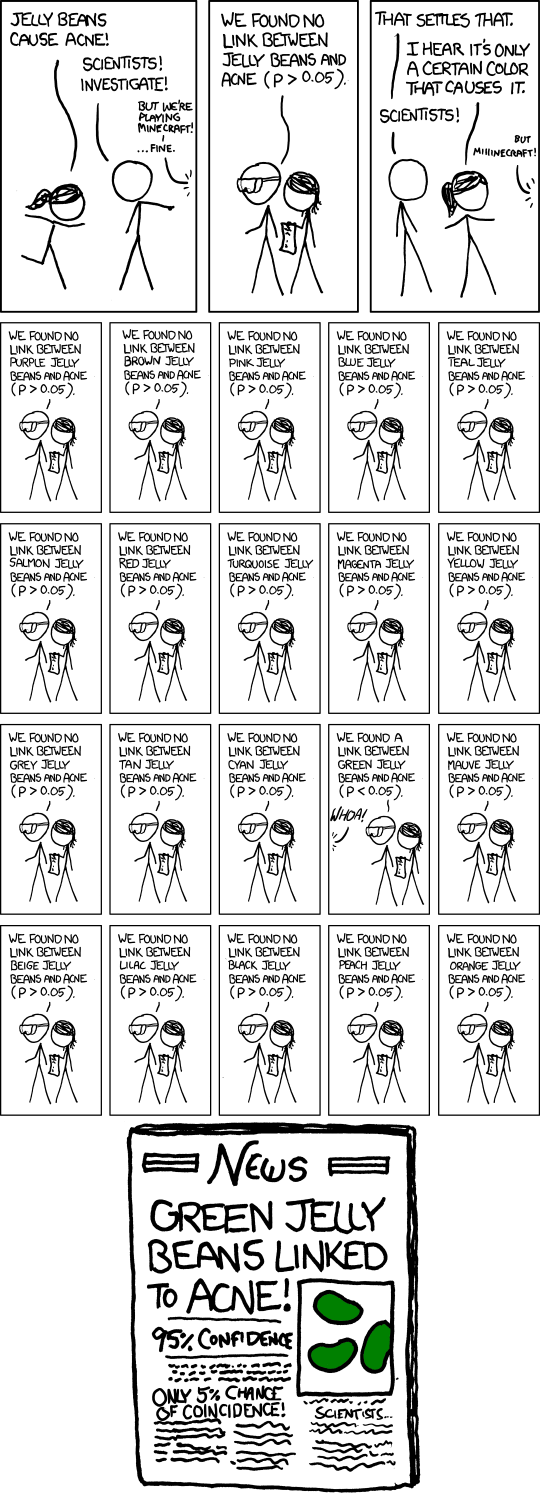
So it seems not unreasonable to conclude that inequality does not correlate with increased crime rates in the United States, and that it may reduce crime. While the paper's abstract notes that there's perhaps a link between the top 10% income share and motor vehicle theft, that's one significant crime increase out of 36 specifications at the 5% threshold; I wouldn't have put that result in the abstract. Because of, well, this:


Nominal and real

Stats New Zealand reports wage growth over the last year. It's not great in nominal terms, as the Press points out:
For those who actually got a pay rise, the mean increase for all surveyed salary and wage rates that rose in the December 2012 quarter was 3.0 per cent, compared with 3.1 percent in the September 2012 quarter.
The latest mean increase is the lowest since a 3.0 per cent increase in the September 2000 quarter. Of all pay rates surveyed, 55 per cent showed annual increases in the year to December 31.
But hold on a minute..

Year-on-year CPI inflation in the September quarter was 0.8%; December quarter was 0.9%. It's not been that low since December 1999. If we look at series SW512Q, which tallies mean percentage increase from previous quarter among those receiving a pay increase (presumably the one cited in the Press, above), we find that the median increase from December quarter 2003 through December quarter 2012 was 3.9%. If we look at CPI over the same time period, the median was 2.6%. I'd be happier getting a 3% nominal increase when the CPI is 0.9% than getting a nominal 3.9% increase when the CPI is 2.6%. And, the mean increase from the same quarter of the previous year (SW512A) is 3.7% (median increase against same quarter of the previous year is 3.0%).

If you net inflation out of wage growth, the last quarter is about double the median since December 2003 (note that the easy-to-get Stats series here starts December 2003).

Aha, that only counts increases among those getting an increase. What about the people who didn't get an increase?

Actually, things are looking pretty good there - and surprisingly so given the below-the-lower-bound current inflation outcomes. Over the whole of 2012, 43.75% of workers reported zero wage increase. From 2003 to December quarter 2008, the average quarter saw 41.3% of workers reporting zero wage increase. If our current low inflation rates were causing serious problems given nominal wage rigidity, I for one would be expected a heck of a lot more bunching around the zero increase threshold. Instead, this year's figures are about where they were in 2004.

I've put things into a Google Spreadsheet. The original LCI data is here.

The blue line traces nominal median wage increases, year on same quarter prior year, going back as far as the easy-to-get series goes. The red line traces CPI inflation. Note that I netted the GST increase out of those figures for December 2010-September 2011 as those were fully compensated by income tax cuts. The yellow line is simply the nominal wage increase less CPI.

Here is the percentage of workers receiving a wage increase over the same quarter in the prior year. So if you were making more this year than the same time last year, you show up as a 1 in this series, otherwise a zero. If low inflation combined with nominal wage rigidity causes problems, I'd have expected a sharper increase in the proportion of workers receiving no pay increase, although you could tell a story around low inflation and nominal wage rigidity where employers cut on the extensive margin while compensating on the intensive margin (cut some workers but pay remaining workers more).

The unemployment numbers come out later this week.

Monday, February 4, 2013

Contraception costs

Berk Ozler asks whether the government should provide free emergency contraception for young girls. It's an interesting question, especially as the Taranaki District Health Board recently announced plans for free EC provision.* Berk summarises the existing literature pretty comprehensively.

But I'll quibble a bit with his policy conclusion, at risk of channeling Steven Landsburg.

Berk and I agree entirely on his first conclusion: the morning after pill should be easily available without a prescription. It's safe, accidents (or worse) happen, and the barrier of going through a doctor can be non-trivial.

He then asks if it should be subsidised. Berk writes:
That question is more difficult. It depends on the future costs of teen pregnancy (and abortions) – both to the individual and to society. If children from single parent families, poorer families, etc. are more likely to need EC but less likely to be able to afford it, it may make sense for the government to subsidize the cost. Even if the costs are solely to the future adult herself and not to the society in general, they can be justified under the principle of ‘second chances’ – after all we’re talking about children and young people here. If there are positive externalities, the argument for subsidies is even simpler. So, I’ll return to the issue of subsidies after reviewing the literature on the individual consequences and public health externalities of making EC freely available to young people.
Berk's summary of the relevant literature:
  • "There is some reason to worry about children's outcomes in teen pregnancies" 
    • increased risk of poor natal outcomes

  • "The evidence on the effects of teen pregnancies on future outcomes of the mother are mixed. There is not enough here to justify a strong stance for a policy decision." 
    • Most of the effects you see in the cross section are due to that women having children in their teens tend to be different from those who decide to wait until they are older, and would have different outcomes even if they had not had children while young. 

  • There is little evidence that use of the morning after pill has any effect on teen pregnancy rates, abortion rates, or STD rates, though it does somewhat reduce condom use.
    • Berk here highlights that failure to use the emergency contraception even where provided may be a problem, perhaps due to "a failure to recognize (or acknowledge) a risk of conception on part of the prospective users." He writes:
      “In a survey of thousands of teenage mothers who had unintended pregnancies, about a third who didn’t use birth control said the reason was they didn’t believe they could get pregnant. Why they thought that isn’t clear.” The evidence is suggesting that (a) unprotected sexual activity is high among people who don’t report not wanting to have children; and (b) they don’t use the free EC that is in their drawer and can be used for up to 5 days after the unprotected sexual activity or a contraceptive incident. You can take a horse to the water, but you cannot make him drink… 
He concludes that though the public health effects may be negligible, emergency contraception should be available for young people and, ideally, free if we can afford it.

Ozler notes that the morning after pill costs $40 USD and that there's some evidence that teens substitute to its use from condoms (which are rather cheaper). If there's little evidence of other policy-relevant benefits from widespread subsidised EC availability, then I'm having an awfully hard time seeing why the government should stump up $40 per dose.** The NZ Family Planning website sells condoms for about $1.50 each.

I'm also pretty sure that  the government provides subsidised access to condoms via a doctor's prescription.

Steven Landsburgh controversially wondered last year why he should be paying for other peoples' birth control. I can see some decent second-best arguments for that the government subsidise birth control, not least of which is that it may partially offset the incentives created by governments' commitments to support children borne by those who cannot afford to raise them. The elasticity of birth rates among the improvident to subsidised childbearing may be rather larger than the elasticity with respect to the financial cost of contraception, but the former isn't much on the table aside from DPB work requirements. Whatever the second-best arguments for subsidised contraception, I have a hard time seeing the case for a general subsidy for a relatively expensive method of contraception.

* This follows on from a similar trial at the Auckland DHB. One of my projects for the coming semester is to get data from sexual health clinics on STD rates to see whether the Auckland trial had any effect on STDs. We'd started getting things lined up to get that data in the spring*** of 2010, and then the earthquakes put it rather far onto the backburner.

** If you want to subsidise the morning after pill for women seeing a doctor after sexual assault, I'm on your side. That's different from giving it for free to everybody.

*** Wow, North American habits die hard. First draft said fall. But it was August/September. And that's spring here.

The costs of everything... a continuing series.

The real cost of fiscal externalities running through the health system isn't the transfer from relatively healthy taxpayers to those choosing unhealthy lifestyles (and the otherwise sick), it's the cost we bear when we put too much priority on reducing that total health bill relative to other goals.

Recall that a fiscal externality is an effect I have on you by virtue of the tax system. If my behaviours affect my health, and even if I would have made exactly the same choices if I bore all of the costs of my own healthcare, I nevertheless impose a cost on you through the tax system. But as just about every choice you make has some effect on your health, the scope for individual autonomy is awfully limited in a world where we tried setting policy to minimise those behaviour-related costs. @LibertarianView provides a short list of things you might be doing that cost the UK's NHS money.

I fielded an email from the producer over at Freakonomics Radio who wondered if I knew of any studies of the aggregate cost of sex; Stephen Dubner had a pretty tongue-in-cheek proposal around it a while back. I didn't know of any. I hope that nobody took Dubner's proposal too seriously as I'm rather sure he didn't. But I suppose a study tallying the costs of sex, under an assumption that there'd be no loss of consumer surplus were it abolished, could be just the thing to make the whole "Costs of X" industry finally die of shame.

Sunday, February 3, 2013

Guaranteed Income and Living Wages

Chris Dillow lays out the basic problem with living wages mandates. While having more money makes people happier, being unemployed is pretty awful. So whether mandating living wages can make sense will depend on how many people are forced out of work and how unhappy they are relative to the comparably small gains among the greater number of winners.
We can roughly quantify this. A paper by Nattavudh Powdthavee suggests that, in terms of wellbeing, we need a 30% rise in income to offset being unemployed. This means that if the average winner from a living wage gains 3%, we need at least 10 winners for every unemployed*.
You might think this condition is fulfilled. It is, if we consider only the wellbeing of those earning less than the living wage. But their higher wages come at the expense of profits. How much you're troubled by this depends on how you regard those employers. Are they exploitative tax-fiddling mega corporations, or are they small businesses struggling to get by?
And then there's the standard question about utilitarianism: is it legitimate to impose (largeish) costs upon a minority so that the majority enjoy other benefits?
He suggests that a guaranteed annual income - a variant on negative income taxes - may be the better option. When workers' non-work option improves, their bargaining position changes and wages have to go up.

This is true to a point, but it does require that voluntary unemployment (I don't want to work at going wages) makes you a lot less unhappy than involuntary unemployment (I want to work at the mandated minimum living wage, but nobody wants to hire me). And while that's almost certainly the case, if you put any weight on behavioural economics stories around myopia, hyperbolic discounting, or habituation, then you might be worried about schemes that make people indifferent to working.

Dillow writes:
Which raises the question: why is the campaign for a living wage so much more popular than that for a basic income? I suspect the answer has less to do with technocratic or high-brow ethical considerations than an appeal to reciprocity: the living wage demands that hard workers get a "fair" deal. But I wonder whether such appeals - powerful as they are - are a sufficient basis for policy.
I don't expect that Dillow is wrong about this - reciprocity norms are strong, and intuitions about the deserving and undeserving poor go back an awfully long way. But we can give a technocratic objection to guaranteed basic income schemes: if the guaranteed wage is high enough to make it an attractive alternative to working, which it has to do to give workers the kind of bargaining power that Dillow is looking for, then it also risks enticing those who should be entering the job market at low wages and working their way up to instead lock themselves into a permanently lower path.

I'm not opposed to moves to shift from the current welfare framework to a GAI via a negative income tax, combined with lump-sum transfers for specific hardships like severe disability. But I worry about the kinds of things that Senior and Mill worried about rather a while ago.

Here's Andrew Farrant on those debates:
Poor relief and slavery: Senior's conjecture?

As noted earlier, Nassau Senior argued that slavery and socialism had much in common. Similarly, Senior, in an 1841 article appearing in the Edinburgh Review, had scathingly argued that the perverse incentives allegedly inherent to the English Poor Laws (e.g., the provision of outdoor relief to ostensibly indigent but able-bodied laborers) had done much to reduce "able-bodied paupers" to de facto slavery (Senior 1865 [1841]: 45-115); as Senior puts it, the poor laws had supposedly attempted to provide the able-bodied laborer with:
[A] security incompatible with his freedom; to oprovide for him and his family a comfortable subsistence at his own home [outdoor relief], whatever were his conduct, and whatever were the value of his labour ... [This] attempt succeeded in what have been called the pauperized districts, and placed the labourer in the condition, physically and morally, of a slave; - confined to his parish, maintained according to his wants, not to the value of his services, restrained from misconduct by no fear of loss, and therefore stimulated to action and industry by no hope of reward.
(Senior 1865 [1841]: 115, emphasis added)28
Accordingly, outdoor relief had supposedly occasioned various incentive-incompatibilities - supposedly "fatally relaxing the springs of industry and the restraints of prudence" (Mill 1965: 360) - prior to 1834.28 Accordingly, while the desirability of poor law reform was supposedly apparent to all and sundry, the "Commissioners of Inquiry had reported that it was not expedient, or even practicable ... [to [exclude from relief the able-bodied labourer who professed to be unable to earn wages adequate to the support of his family" (Senior 1865 [1841]:91; emphasis added).30 Consequently, an incentive-compatible poor law would supposedly guarantee that only the truly indigent received able-bodied relief. As Senior notes, incentive-compatible poor relief would automatically "test .. the truth of ... [the able-bodied applicant's] representations" (ibid.; emphasis added). The test favored by Senior was relatively simple: make the receipt of poor relief markedly "less eligible than independent labour" per se (ibid.); as Senior explains, this was easily done by conjoining the receipt of poor relief to a "condition which no man not in real want would accept, or would submit to when that want had ceased" (ibid.: 91; emphasis added). Consequently, the 1834 New Poor Law stipulated that any applicant for able-bodied relief
enter a workhouse ... supported there by a diet ample indeed in quantity, but from which the stimulants which habit had endeared to him were excluded - should be subjected to habits of cleanliness and order - should be separated from his former associates, and should be debarred from his former amusements.
(ibid.: 93)31
Accordingly, indoor relief - the workhouse test per se - was allegedly incentive-compatible: only the truly indigent would voluntarily accept workhouse discipline. As Senior explained, whenever any able-bodied, and self-professedly, indigent laborer readily "accepted these terms, that acceptance [automatically] tested the reality of his wants (ibid.: 91; emphasis added).

As Mill, readily subscribing to Senior's logic, later explained, the wholly "pauperized districts ... have been dispauperized by adopting strict rules of poor law administration" (Mill 1965: 961; emphasis added.)
Read Farrant's whole treatment of the debates around incentives and the old British poor laws.

I don't think we can or should return to the poor laws mandating indoor relief. But the incentive problems laid out by Senior and Mill sure have not changed in the last couple of centuries. At the margin, consideration of these issues should move more welfare transfers from cash for poor people to subsidies for early childhood care, and suggests that any GAI that approaches a living wage would not achieve the appropriate separating equilibrium.

Previously: